
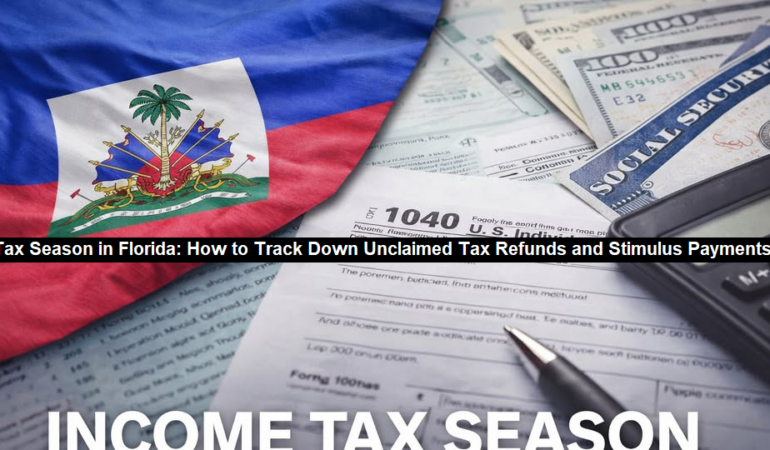
As the calendar turns toward April 2026, Florida residents are entering one of the most significant tax filing seasons in recent history. While most focus on the current year’s deadlines, a massive, silent pool of wealth remains unclaimed from previous years. Billions of dollars in federal tax refunds and pandemic-era relief payments go unnoticed annually.
In Florida, where high population mobility and the “snowbird” lifestyle are the norms, the risk of a refund check getting lost is exceptionally high. This is your money whether it is a forgotten stimulus payment or a refund on an amended return. The first step to recovering money that is rightfully yours is to understand how these funds get lost and why they are lost.
Why Tax Refunds Become Unclaimed
Tax refunds are seldom wasted since no one desires them, they are wasted due to administrative losses of contact. Florida alone recorded close to 470,000 newcomers to the state in 2025 alone. This constant flux creates a “paper trail” nightmare. If you moved between filing your return and the issuance of your refund, that check might have been returned to the IRS as undeliverable.
Common scenarios include:
The Hoax of Shifting: Florida is one of the states with the highest rates of relocation, so to avoid inaccurate forwarding instructions and checks mailed to dead addresses, many taxpayers do not change their address with the IRS.
Stimulus Complication: Although the deadline of most 2021 Recovery Rebate Credits has lapsed by the beginning of 2026, some taxpayers are still finding out that their check was lost, stolen, or destroyed.
Life Changes: Divorce or death of a family member: Joint refunds are frequently left uncashed due to the signature needed on a check no longer being readily available.
The “No Income Tax” Myth: Because Florida has no state income tax, some residents mistakenly believe they don’t need to track federal refunds as closely, assuming the “big” tax hurdles don’t apply to them.
For those looking to stay ahead of the curve, NerdWallet’s tax guides offer excellent strategies for maintaining a clean financial record.
Types of Unclaimed Tax-Related Money
The “unclaimed tax money” is a general term that incorporates a variety of financial sources:
Federal Income Tax Refunds: It covers a regular annual refund plus amended annual refunds (Form 1040-X).
Tax Credits: Child Tax Credit and Earned Income Tax Credit (EITC) are other credits that are often left unclaimed by eligible tax filers, who do not fill out the required schedules.
Stimulus and Relief Payments: The majority of the deadlines are no longer in effect, but those who received a check but lost or destroyed it can still take a payment trace.
Special OBBBA Refunds: As a result of the retroactive changes to the 2025 tax year under the One Big Beautiful Bill Act of 2025, many Florida families are receiving higher-than-average refunds in the 2026 tax year because of over-withholding.
Understanding these nuances is vital. As Kiplinger’s tax reports highlight, billions are left behind simply because taxpayers don’t realize they qualify for refundable credits even with zero tax liability.
How to Search for Your Unclaimed Tax Refunds
In order to begin searching, you will need the following: your Social Security Number, your filing status, and the list of all the addresses where you have lived within the last three-year period.
In addition to verifying the official agency records, Florida residents are encouraged to look up unclaimed funds via special databases. When tax refunds are returned to the IRS as undeliverable and remain uncollected, they often surface in unclaimed property systems once the checks officially expire.
Search Strategies:
- Look into the Three-Year Window: The IRS usually has a three year statute of limitations. To claim a refund, the deadline is April 15, 2026, in the 2022 tax year.
- Search All Names: Include maiden names, hyphenated names and both spouses names in joint filings.
- Address History: No, do not just find your current Florida address; your former addresses out of state should be included as well, in case you have recently changed address.
Read: Common Mistakes to Avoid When You Become a New York Notary
Special Tax Situations for Florida Residents
The demographics of Florida pose certain challenges to unclaimed money:
Snowbirds: Seasonal residents usually receive mail which is sent to an incorrect address. Were you at your northern home in July when a refund was sent out? it may have been lying in an empty Florida mail-box.
New Residents: When you relocated to Florida, had you been living in a state with an income tax (such as New York or Illinois), it is likely you are entitled to a state-level refund in your previous home state.
Retirees: Modifications in Social Security withholding or increases in Medicare premiums tend to cause small, unplanned refunds that are too easy to miss.
The Tax Foundation financial experts observe that the 2026 season is especially tricky because of the 2025 legislative changes, which is why it is even more crucial to check whether you are getting your money returned or not.
What to Do When You Find Unclaimed Tax Refunds
In case of a lost refund, do not waste time. The time runs out on April 15, 2026, regardless of the number of unclaimed 2022 refunds (1.3 million). After that expiry date, the funds are under ownership of the U.S. Treasury.
To claim your money you will usually need:
- Evidence of Identity: A Credible photo ID and your Social Security card.
- Tax Documentation: A copy of the return of the specific year.
- Documentation of Address Verification: Documentation as to having resided at the address where the refund was initially dispatched.
Be ready to wait several weeks, particularly when making a claim of a refund in a previous year or a trace on a lost check.
Claim Your Hard-Earned Money
Tax refunds are not a bonus, it is your money which you had overpaid during the year. With a mobile state as Florida, it is too simple to lose these funds through a move or through a change in name.
Waste no more time, search now and get the cash that is due you. As the deadline of May 2022 when 2022 refunds will be made is approaching in April 2026, the moment has never been better to make sure that your financial past is taken into consideration. Check your accounts, be sure that you can find your money at home, search the databases.
